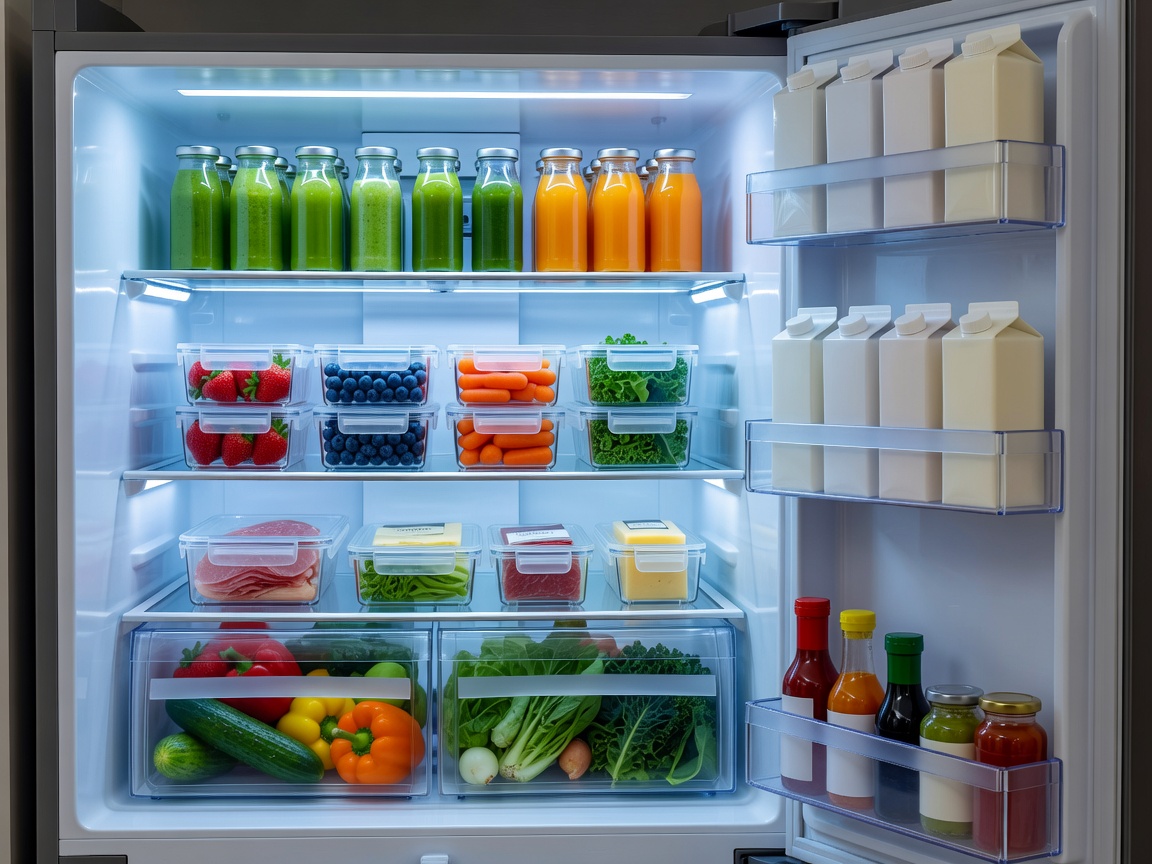
More Than Just a Tablet on a Door
When smart refrigerators first hit the market, they were largely characterized by giant touchscreen panels embedded in the door. While these "family hub" displays remain popular for leaving digital notes, streaming music, and pulling up recipes, the true value of a smart refrigerator lies behind the door. Modern connected cooling appliances utilize internal cameras, complex climate zones, and AI-driven inventory tracking to revolutionize how we store food.
Food waste is a major issue in the modern household. We often forget what we have pushed to the back of the shelf, or we let produce wilt in poorly optimized crisper drawers. Smart refrigerators aim to solve these foundational issues through technology rather than just offering novelty features.
Inventory Management and Internal Cameras
One of the most practical applications of smart tech in refrigeration is the integration of internal wide-angle cameras. These cameras capture an image of the interior every time the door closes. If you are at the grocery store and cannot remember if you are out of milk or eggs, you simply open the companion app on your phone and look inside your fridge in real-time.
More advanced models take this a step further with computer vision. The software attempts to identify the items you place on the shelves, prompting you to input expiration dates. When an item is nearing its expiration, the refrigerator can send a push notification to your phone, reminding you to use the ingredient. It can even suggest recipes based on the items it knows you have in stock.
Advanced Climate Control
Beyond cameras, smart refrigerators excel in micro-climate management. Traditional fridges cool the entire cavity evenly, which is not ideal for all types of food. Smart models frequently feature dual or even triple evaporators, completely isolating the air in the fridge from the air in the freezer. This prevents freezer burn and stops the transfer of odors (so your ice doesn't taste like leftover garlic chicken).
Furthermore, digital sensors constantly monitor temperature and humidity. If a door is left slightly ajar, the appliance not only sounds a local alarm but sends an alert to your phone. The system can also learn your household's usage patterns. If it knows the door is typically opened frequently between 5 PM and 6 PM during dinner prep, it will preemptively drop the temperature slightly to compensate for the incoming warm air.
Pros and Cons
As with all complex technology, adding computing power to a cold, humid environment creates potential points of failure.
- Pros: Drastically reduces food waste through inventory tracking; remote viewing prevents over-purchasing at the store; superior climate control preserves food longer; diagnostic alerts warn you of maintenance issues before a breakdown occurs.
- Cons: The touchscreen panels age faster than the refrigeration components; high repair costs for internal electronics; privacy concerns regarding internal cameras and data collection; higher energy draw from continuous Wi-Fi connectivity and screen usage.
Selection Criteria
If you are in the market for a smart refrigerator, prioritize cooling technology over screen size. A massive display is fun, but dual compressors and smart humidity sensors are what actually keep your food fresh. Look into the app ecosystem—read reviews of the companion app to ensure it is stable and regularly updated. Finally, consider models that offer modular internal designs, allowing the physical space to adapt just as dynamically as the software.
Conclusion
Smart refrigerators have matured past their gimmicky beginnings. By focusing on the core problems of food storage—visibility, climate consistency, and inventory awareness—they provide genuine utility to the modern household. While they require careful consideration regarding longevity and price, the daily convenience they offer is undeniable.