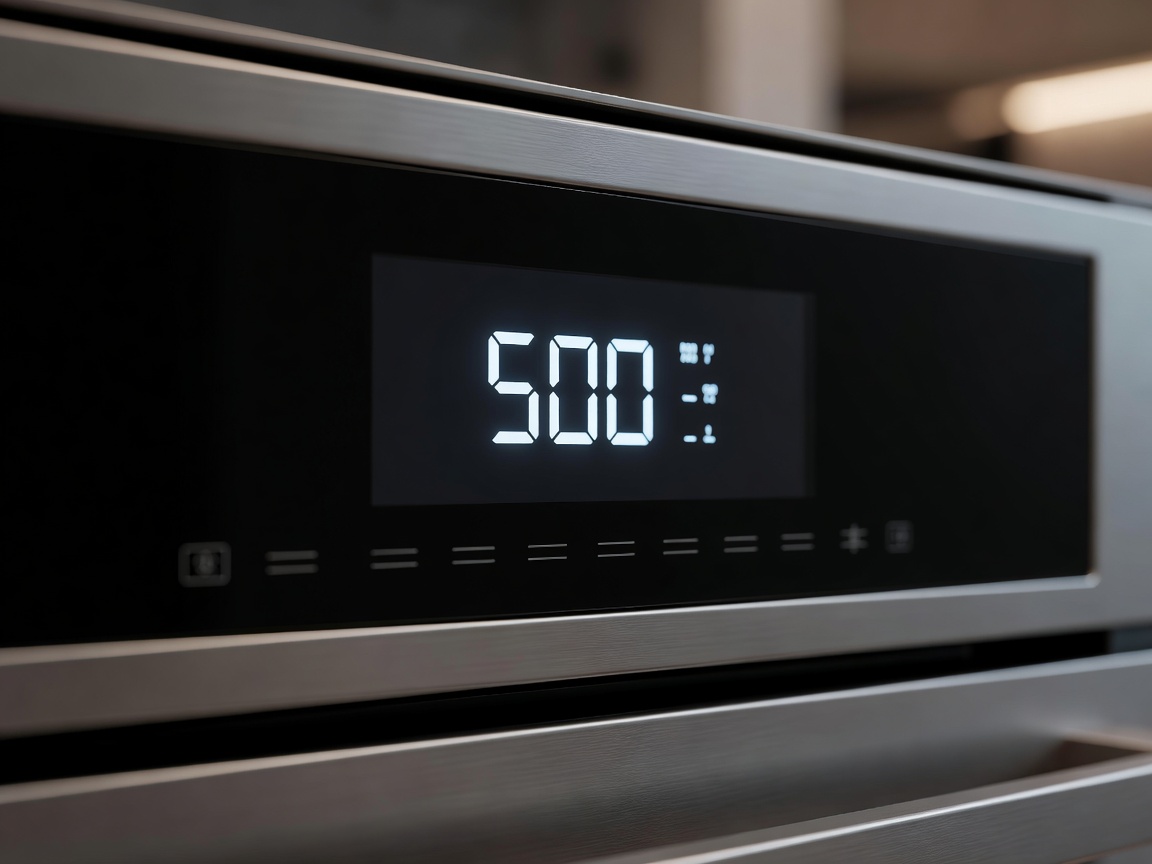
Moving Beyond the Traditional Dial
For decades, baking and roasting have relied on analog thermostats and physical dials. While functional, traditional ovens are notorious for temperature fluctuations—often swinging significantly above or below the target temperature to maintain an average heat. The advent of smart ovens marks a dramatic departure from this legacy design. By integrating sophisticated microprocessors and solid-state relays, modern connected ovens employ PID (Proportional-Integral-Derivative) controllers to maintain exacting thermal environments.
This level of precision is fundamentally changing how home cooks approach difficult recipes. Macarons, soufflés, and delicate pastries require stable heat. A smart oven not only reaches the target temperature but holds it with a margin of error practically imperceptible to the baking process.
Connectivity and Remote Management
The defining feature of a smart appliance is its ability to communicate. Utilizing standard 2.4GHz Wi-Fi networks (which penetrate walls better than 5GHz bands), smart ovens connect directly to your home router, opening up a suite of remote capabilities. Through proprietary mobile applications, users can preheat their ovens on the commute home, adjust temperatures from the living room, or monitor the internal temperature of a roast via integrated meat probes.
Furthermore, many contemporary models integrate internal cameras. These high-heat-resistant lenses allow you to watch the browning process of bread or the rising of a cake directly on your smartphone screen, eliminating the need to open the oven door and release precious heat. This visual feedback loop is incredibly helpful for cooks trying to learn visual cues for doneness without risking their bake.
Recipe Integration and Automated Cooking
A significant trend in the smart oven market is the integration of digital recipe libraries. Rather than manually setting a temperature and timer, cooks can select a recipe in a companion app and send the exact cooking parameters straight to the appliance. The oven will automatically cycle through different modes—for instance, starting with high-heat convection for a crisp crust, then dropping to a gentle radiant bake to finish the interior of a loaf of bread.
This automation lowers the barrier to entry for complex culinary techniques. However, it is vital to acknowledge that relying entirely on app-guided cooking can sometimes prevent a cook from developing their own intuition. It is a powerful tool, but one best used in tandem with fundamental culinary knowledge.
Pros and Cons of Smart Ovens
While the benefits are numerous, smart ovens are not without their drawbacks. The inclusion of complex electronics in a high-heat environment presents unique engineering challenges. Touchscreens can become unresponsive if covered in flour or grease, and the reliance on cloud servers means that if a manufacturer deprecates an app, some smart features could be lost.
- Pros: Unmatched temperature precision; remote monitoring saves time; internal cameras prevent heat loss; automated multi-stage cooking cycles; integration with voice assistants for hands-free control.
- Cons: Higher initial purchase price; reliance on software that may become outdated; touch controls lack the tactile feedback of physical knobs; higher repair costs if the motherboard fails.
Selection Criteria
When evaluating a smart oven for your kitchen remodel or appliance upgrade, consider the ecosystem it uses. Ensure the appliance supports major voice assistants if you plan to use voice commands. Check the manufacturer's track record for software updates—appliances that receive regular Over-The-Air (OTA) updates will continue to improve and remain secure over time. Finally, look for models that maintain manual fallback controls, ensuring you can still cook a meal even if your home Wi-Fi network goes down.
Conclusion
Smart ovens represent a significant leap forward in home culinary technology. By marrying the precision of commercial appliances with the convenience of modern software, they offer unprecedented control over the cooking process. While they require a higher initial investment and a slight learning curve, the benefits of consistent, perfectly cooked meals make them a compelling choice for both novice cooks and seasoned home chefs alike.